

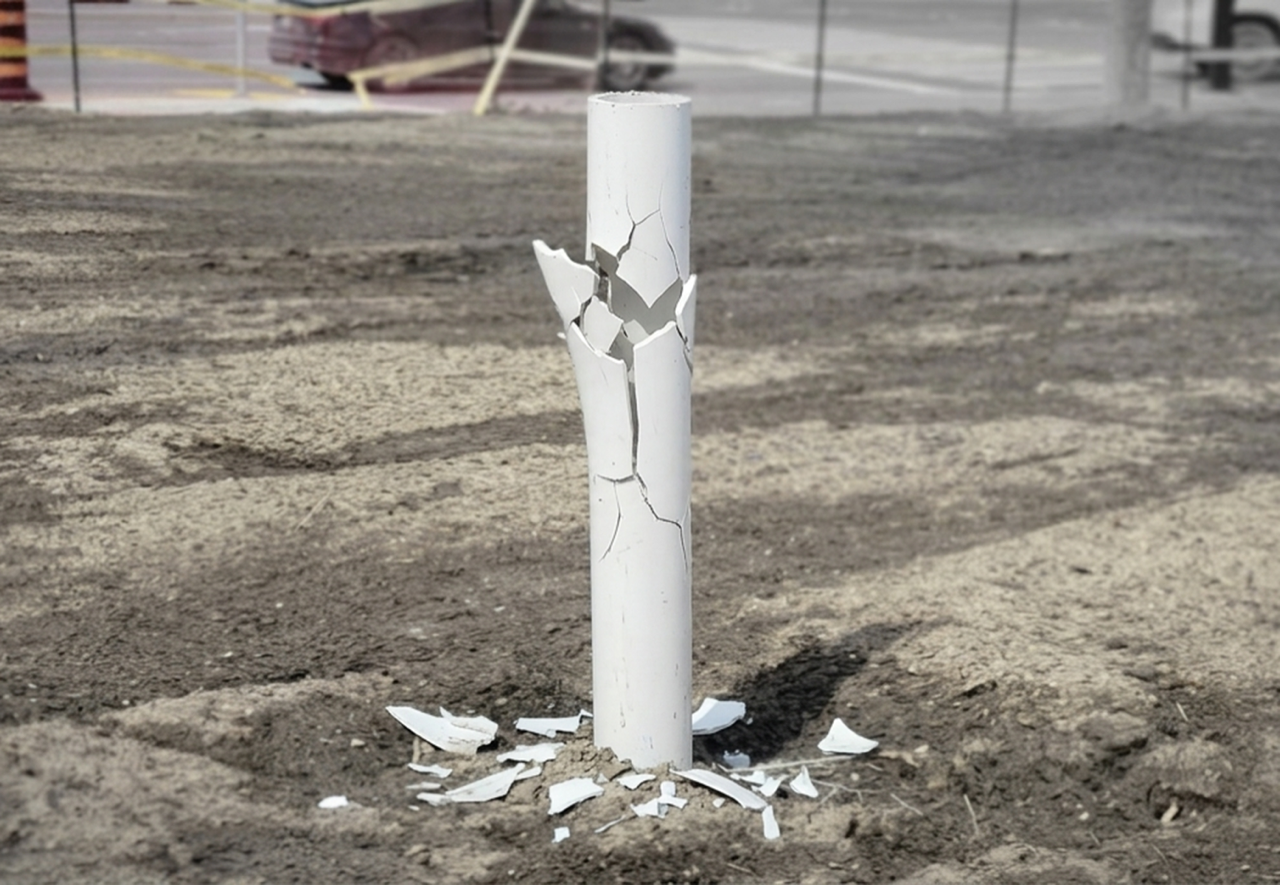
Why Non-CSA PVC Is a Problem in Drilling
Know What You’re Putting in the Ground!
When you’re drilling – whether for environmental monitoring, geotechnical work, or water wells—the materials you install don’t just support the borehole. They become part of the environment. PVC casing and screens often sit in soil and groundwater for decades, which means their quality matters far beyond installation day.
That’s where non-certified PVC becomes an issue.
In Canada, most regulated PVC materials are certified through the CSA Group, while in the United States similar standards are enforced through NSF International. When a product meets these standards, it has been tested to ensure it won’t leach harmful levels of chemicals into surrounding soil or water. Non-CSA or non-NSF PVC, on the other hand, has not gone through that level of scrutiny. Its formulation, additives, and long-term behavior are largely unknown.
PVC itself is not just a simple plastic. It is a mixture of a base polymer and various additives that give it strength, flexibility, and durability. Some of these additives—such as plasticizers, stabilizers, and trace metals—are not permanently bound within the material. Over time, especially in subsurface environments, they can migrate out of the pipe and into surrounding soil or groundwater. This process is known as leaching.
In controlled, certified products, leaching is tested and kept within strict safety limits. With non-certified PVC, there are no guarantees. Under real-world drilling conditions—where materials are exposed to temperature changes, mechanical stress during installation, and constant groundwater movement—this leaching can become more pronounced.
For drillers, the impact is very real. If casing or screen material is releasing contaminants, it can directly affect the accuracy of environmental sampling. A groundwater sample might show the presence of volatile organic compounds or other chemicals that are not actually from the formation, but from the pipe itself. That can lead to false positives, misinterpretation of site conditions, and ultimately flawed environmental decisions.
The issue doesn’t stop at data quality. Monitoring wells are designed to be chemically neutral so they reflect true site conditions over time. Introducing non-certified PVC into that system can alter groundwater chemistry and compromise long-term monitoring programs. In some cases, wells installed with questionable materials may need to be abandoned and replaced, adding significant cost and project delays.
Responsibility for these issues doesn’t fall on one party alone. In Canada, oversight involves organizations like Health Canada alongside provincial regulations and CSA standards. In the U.S., agencies such as the United States Environmental Protection Agency set the broader regulatory framework, with states enforcing compliance. If non-compliant materials lead to contamination, accountability can extend across the entire chain—from manufacturers and suppliers to contractors, consultants, and site owners.
Despite these risks, non-CSA PVC still shows up on job sites, usually because it’s cheaper or more readily available, but the upfront savings are minor compared to the potential consequences. Re-drilling wells, redoing environmental reports, or dealing with liability issues quickly outweigh any initial cost advantage.
At its core, this comes down to protecting the integrity of the work. Drilling isn’t just about getting into the ground—it’s about understanding what’s there. When the materials used in that process start influencing the results, the entire purpose of the work is undermined.
Using certified PVC helps ensure that what you’re measuring is real. It keeps your data accurate, your projects compliant, and your reputation intact.
Sorry, the comment form is closed at this time.