

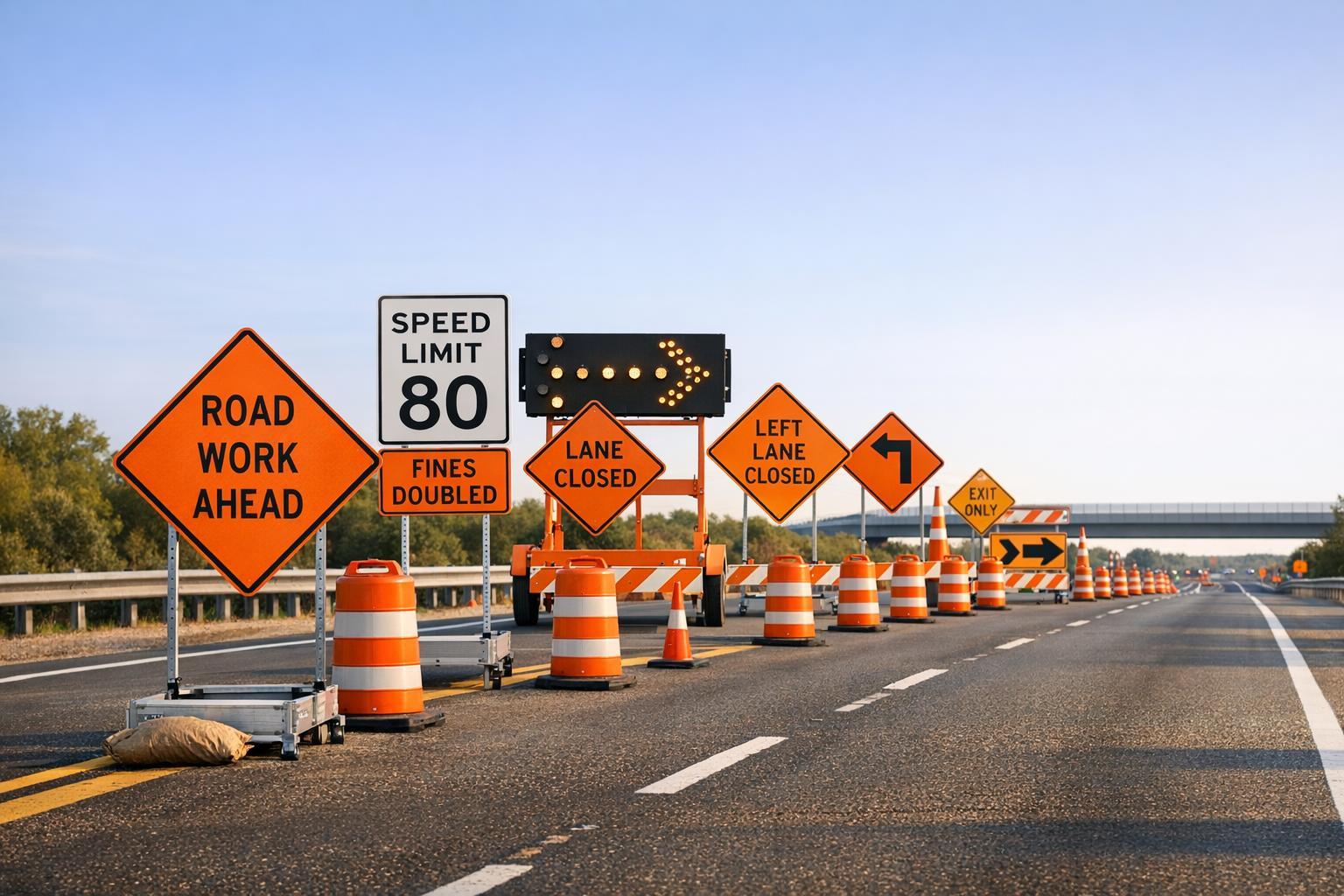
Road Safety While Drilling on a Highway: Protecting Crews and the Public
Highway drilling is an important part of geotechnical investigations, groundwater monitoring, and environmental projects. But working alongside moving traffic presents unique challenges that require careful planning, constant awareness, and a commitment to safety. Whether installing monitoring wells, drilling boreholes, or conducting site investigations, crews must balance getting the job done efficiently with protecting themselves and the public. With vehicles travelling at highway speeds, even a small mistake can have serious consequences.
Safety should always come before production.
Planning Makes All the Difference
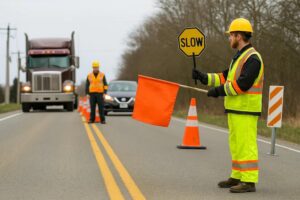
A safe drilling operation begins long before the drill rig arrives on site. Every highway project has its own challenges, from narrow shoulders and limited visibility to heavy traffic and changing weather conditions. Before work begins, the crew should assess the site, identify potential hazards, and establish a traffic control plan that meets the applicable requirements. This may involve advance warning signs, traffic cones, barriers, lane closures, and trained flaggers to guide motorists safely through the work area.
Taking the time to plan properly helps ensure that drivers know what to expect and that workers have enough space to perform their jobs safely. It also allows the crew to identify potential problems before they become dangerous situations.
Creating a Safe and Visible Work Zone
One of the biggest risks when drilling beside a highway is that motorists may not notice the work zone until they are dangerously close. High speeds, distracted driving, poor weather, and limited visibility can all increase the risk of an accident. A clearly marked work zone gives drivers time to recognize the hazards and adjust their speed or position. High-visibility clothing, properly placed warning signs, and well-maintained traffic control devices all play an important role. The drill rig must also be positioned carefully, with enough room for the equipment and crew to operate without entering live traffic lanes. Support vehicles, water tanks, hoses, and drilling tools should remain organized within the designated work area.
A tidy, well-planned site is not just more efficient. It reduces the chances of workers being struck by vehicles, tripping over equipment, or being exposed to unnecessary hazards.
Communication Keeps Everyone Safe
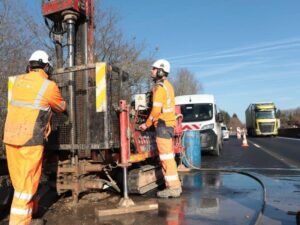
When working beside moving traffic, every member of the crew needs to understand their responsibilities. The driller, helper, site supervisor, and traffic control personnel must work together and communicate clearly throughout the operation. A quick safety meeting before starting work can make a significant difference. Reviewing the traffic control plan, identifying safe routes around the equipment, and establishing clear communication procedures helps everyone understand what to do if conditions change.
Crews must also remain alert throughout the day. Traffic patterns can shift, motorists may enter the work zone unexpectedly, and weather can quickly reduce visibility. If something becomes unsafe, the operation should be stopped until the issue is addressed.
Every worker should feel comfortable speaking up when they see a potential hazard. No deadline or production target is worth putting someone’s life at risk.
Staying Alert When Conditions Change
Highway drilling can be physically demanding, and long hours, noise, fatigue, and repetitive tasks can make it harder to stay focused. Maintaining awareness of traffic and the surrounding work area is just as important as concentrating on the drilling itself. Rain, fog, snow, darkness, and sun glare can also change the safety conditions in a matter of minutes. Crews should be prepared to adjust their work or stop the operation when visibility or traffic control becomes inadequate.
At the end of the day, the site must be left in a safe condition. Equipment should be secured, open boreholes properly protected or closed as required, and traffic control devices maintained or removed according to the approved plan.
Safety does not end when the drill rig shuts down.
A Shared Responsibility
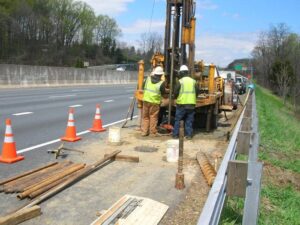
Road safety is about more than protecting the drilling crew. It also means protecting passing motorists, pedestrians, cyclists, and anyone else who may encounter the work zone. Every project presents different challenges, but the fundamentals remain the same: plan ahead, make the work zone visible, keep equipment organized, communicate clearly, and never ignore a potential hazard.
At Alucast, we recognize the important work drilling professionals do to support groundwater protection, environmental investigations, and infrastructure projects. Whether working on a remote property or beside a busy highway, safe work practices are essential to getting the job done right.
The true measure of a successful job isn’t just completing the drilling on time. It’s making sure everyone gets home safely. Always follow the approved traffic control plan, site-specific safety procedures, and applicable provincial, state, and local regulations.
Sorry, the comment form is closed at this time.