

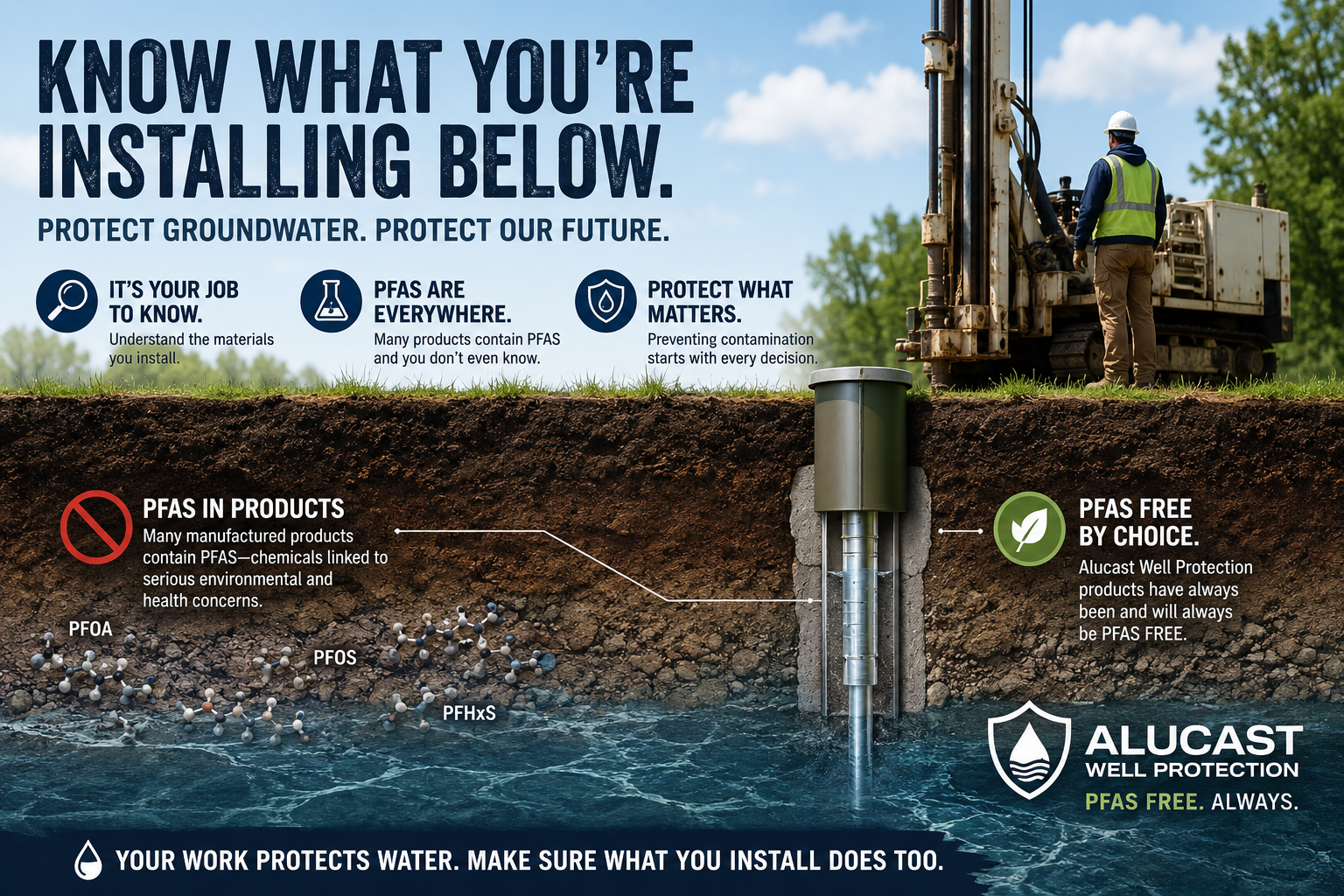
Environmental Drilling: Know What You’re Installing Below Ground
Environmental Drilling: Know What You’re Installing Below Ground
In environmental drilling and groundwater monitoring, every material installed below grade matters. Environmental professionals spend enormous amounts of time and money investigating contamination, sampling groundwater, and designing remediation systems — yet one critical issue is often overlooked:
What are the products being installed actually made of?
Today, PFAS contamination is one of the largest environmental concerns facing the industry. Regulators, consultants, municipalities, and property owners are all working to understand how these persistent chemicals move through soil and groundwater. But while many focus on contamination already in the ground, fewer stop to ask whether the products being installed underground contain PFAS themselves.
That should concern everyone in the environmental drilling industry.
PFAS — often referred to as “forever chemicals” — are used in countless manufacturing processes and materials because of their resistance to heat, water, oils, and corrosion. The problem is that many products containing PFAS are installed without contractors or end users even realizing it.
In environmental drilling, monitoring wells, flushmounts, well protection systems, and related infrastructure are meant to protect groundwater integrity — not introduce additional risk. If the products being installed contain PFAS compounds, that raises serious questions about long-term environmental impact, sample integrity, and liability.
The reality is simple:
It is your job to know what you are installing below ground.
Environmental professionals are trusted to protect water resources and prevent contamination. That responsibility does not stop at drilling methods or sampling procedures. It extends to every component that enters the subsurface environment.
Manufacturers should be transparent about the materials they use. Contractors should ask questions. Consultants should verify specifications. Owners should demand accountability.
At Alucast Well Protection, PFAS-free manufacturing is not a recent trend or marketing response. It has always been part of the company’s approach to environmental protection and product integrity.
Alucast Well Protection products have always been — and will always remain — PFAS FREE.
That commitment matters because environmental protection starts long before sampling begins. It starts with making informed decisions about what goes into the ground in the first place.
As the environmental industry continues to evolve and PFAS regulations become stricter across North America, the companies and contractors that prioritize material transparency will lead the way. The future of environmental drilling depends not only on detecting contamination, but on ensuring we are not contributing to it ourselves.
Know what you are installing.
Know what is going into the ground.
And choose products that align with the purpose of environmental protection itself.
Sorry, the comment form is closed at this time.